Booking option: Helsinki and Suomenlinna tour with hotel pickup, free cancellation up to 24 hours before. Book this Compare options below
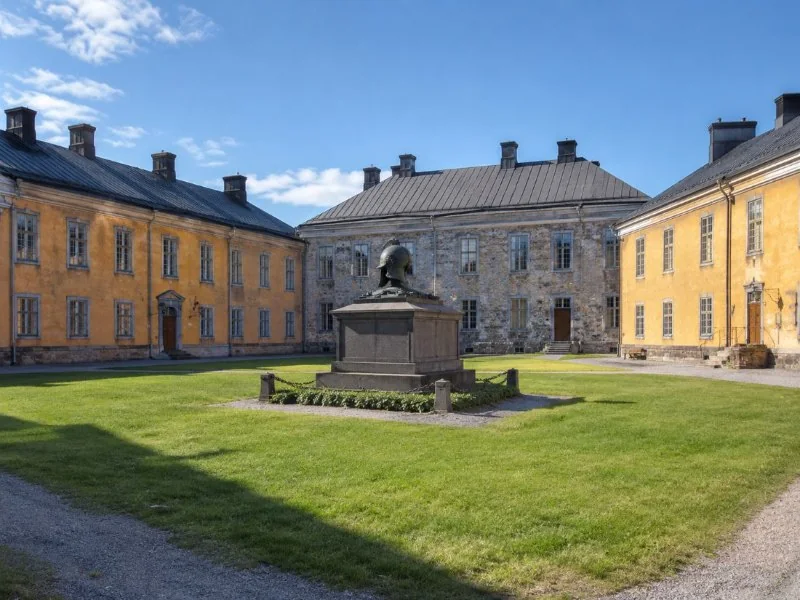
Suomenlinna’s history can be summed up in a few key dates, but each has a story that still echoes across the islands: Ehrensvärd’s tomb in the Great Courtyard, the stone tablets at the King's Gate on Kustaanmiekka, and the church whose dome doubles as a lighthouse. Built under Swedish rule, the fortress passed to Russia in 1808 and to Finland in 1918. Today, it is a district of Helsinki with around 800 residents.
This guide covers who built the fortress and why, why Viapori surrendered without a major battle, what happened in the Crimean War and in 1918, and why Suomenlinna is a UNESCO World Heritage site. If you want to walk the sites yourself, also see what to see in Suomenlinna.
Short answer
Construction of Suomenlinna began on 12 September 1748 on Susisaari under the command of artillery officer Augustin Ehrensvärd, and the work lasted about sixty years. Sweden’s Sveaborg, or Viapori in Finnish, surrendered to the Russians in May 1808, was bombed during the Crimean War in 1855, and was renamed Suomenlinna in 1918. It transferred to civilian administration in 1973 and was added to the UNESCO World Heritage List in 1991.
A brief history of Suomenlinna: what are the key years?
The key years are 1748 (construction begins), 1808 (surrender), 1855 (bombardment), 1918 (new name and prison camp), 1973 (civilian administration) and 1991 (World Heritage site).
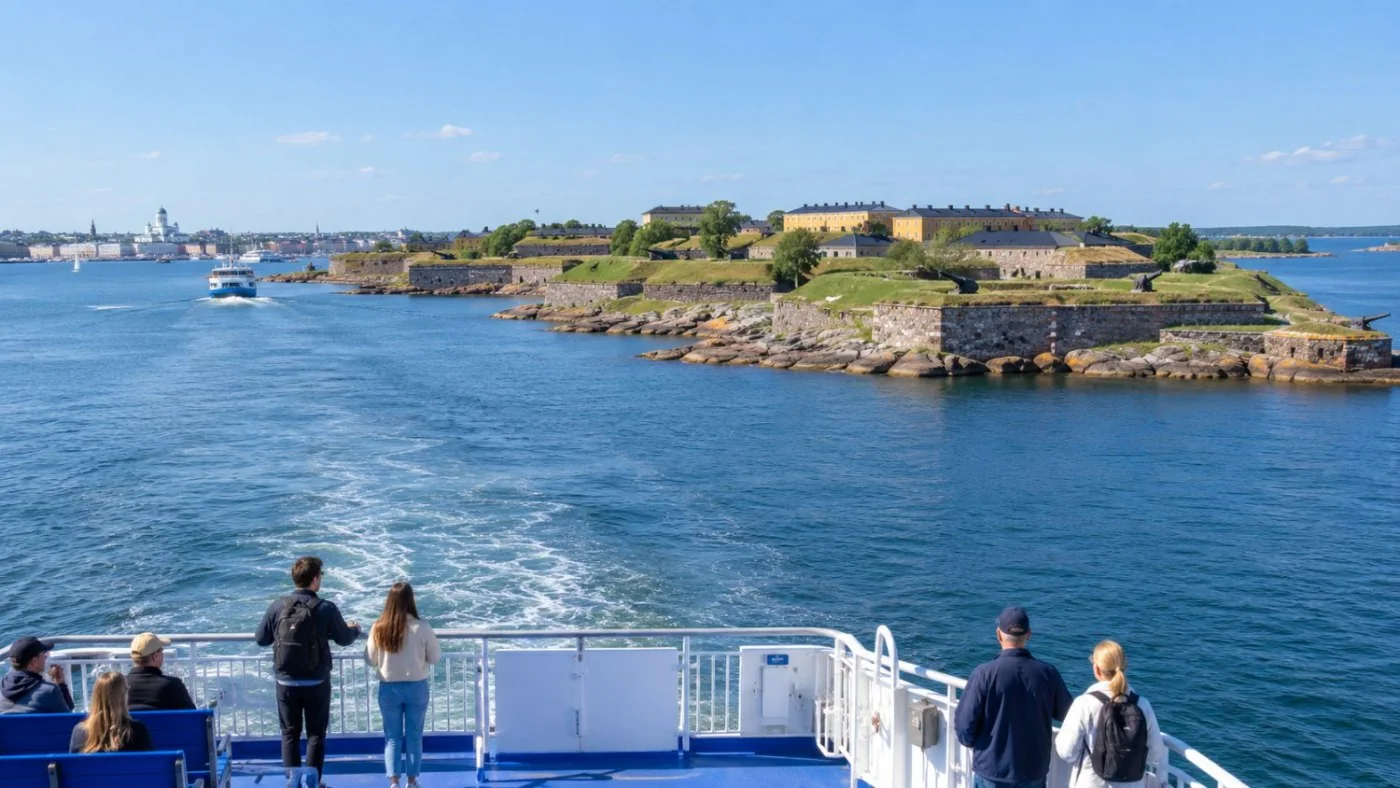
Suomenlinna is a bastion fortress that has been under the rule of three empires: first Sweden, then Russia, and finally Finland. There are six fortified islands: Susisaari, Kustaanmiekka, Iso Mustasaari, Pikku Mustasaari, Länsi-Mustasaari and Särkkä. The timeline below gathers the years referenced in other parts of this guide.
You can also use the timeline as a walking guide: the King's Gate, the church and the Great Courtyard are all on the Blue Route, so you can see most of the historical sites on a regular visit without an entry fee.
| Year | Event |
|---|---|
| 1748 | The foundation stone is laid on Susisaari on 12 September; construction is led by Augustin Ehrensvärd |
| 1753 - 1754 | The King's Gate is built on Kustaanmiekka |
| 1808 | Commandant Carl Olof Cronstedt surrenders the fortress to the Russians in May during the Finnish War |
| 1854 | The church is completed as an Orthodox garrison church |
| 1855 | An Anglo-French fleet bombs the fortress from 9 - 11 August during the Crimean War |
| 1918 | The Russians leave in the spring, the name becomes Suomenlinna and a prison camp is established on the islands |
| 1929 | The church's dome also becomes a functioning lighthouse |
| 1973 | Civil administration begins and the Governing Body of Suomenlinna is established |
| 1991 | Suomenlinna is listed on the UNESCO World Heritage List |
Who built Suomenlinna?
The construction of Suomenlinna was led by the Swedish artillery officer Augustin Ehrensvärd. The foundation stone was laid on Susisaari on 12 September 1748, and construction lasted about sixty years.
The fortress was built during the Swedish era, when Finland was part of Sweden. Work began on Susisaari and gradually expanded to the neighbouring islands, until six islands were fortified. Construction continued for decades, and Ehrensvärd’s influence is still visible on the islands: he also wrote the texts on the stone tablets of the King's Gate.
Ehrensvärd’s tomb is in the Great Courtyard, which is on the Blue Route. It is a stop on, for example, the Helsinki and Suomenlinna tour, whose listing states that the walk in Suomenlinna goes past the barracks, the Great Courtyard and Ehrensvärd’s tomb.
Why was Suomenlinna built?
The purpose of the fortress was to protect the sea routes and serve as a base for naval attacks. It was built on islands off Helsinki, through which ships passed.
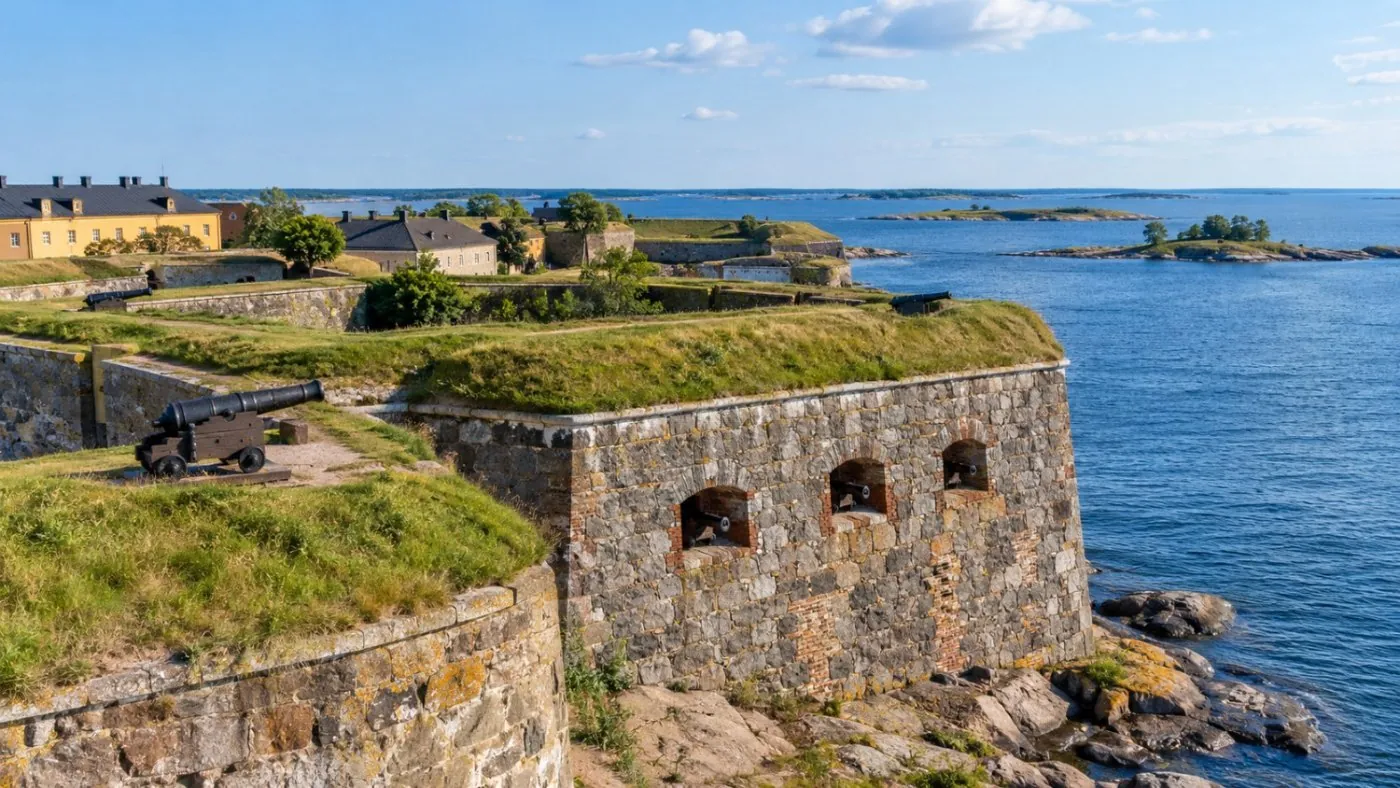
Suomenlinna is a bastion fortress. The islands form a chain, so the fortress is not a single building but an entire system of ramparts, gun emplacements, barracks and a dry dock. For this reason, there is no actual castle in Suomenlinna, despite what the name might suggest.
In Swedish, the fortress was called Sveaborg and in Finnish, Viapori. The dry dock, which the Blue Route passes by, is a reminder that the fortress was also a naval base, not just a defensive position.
Bus, walking and ferry in one day: the Helsinki and Suomenlinna tour includes a return ferry trip and a walk to the Great Courtyard.
Book thisWhy did Suomenlinna surrender in 1808?
Commandant Carl Olof Cronstedt surrendered the fortress to the Russians in May 1808 during the Finnish War. He had agreed that the fortress would surrender unless Swedish warships arrived by 3 May.
During the Finnish War, Viapori’s commandant Cronstedt made an agreement with the Russians with a clear condition: if Swedish warships did not arrive by 3 May, the fortress would surrender. No help came, and in May 1808 Viapori passed to the Russians.
After the surrender, Suomenlinna was under Russian rule for over a hundred years, until 1918.
What happened to Suomenlinna during the Crimean War in 1855?
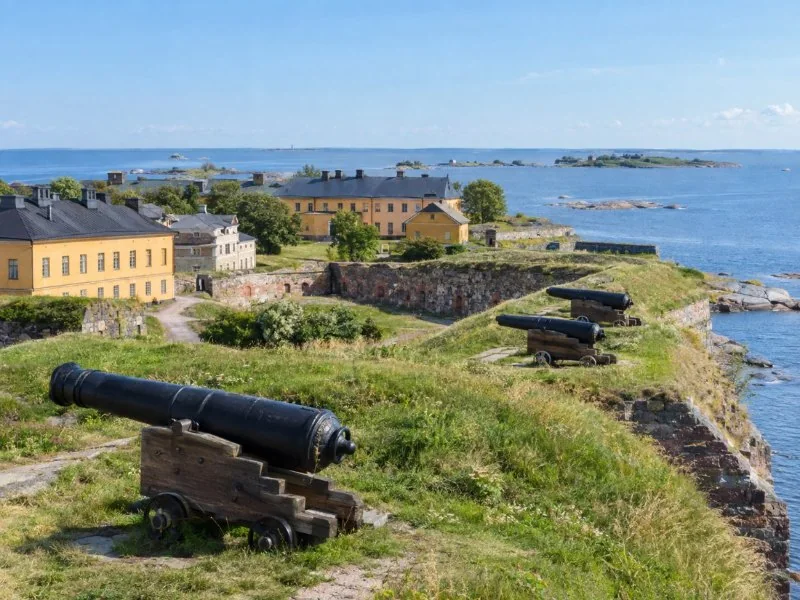
An Anglo-French fleet bombarded the fortress from 9 - 11 August 1855 for about two days. The fortress suffered severe damage.
During the Crimean War, Suomenlinna was a Russian fortress, and an Anglo-French fleet bombarded it in August 1855. The bombardment lasted about two days and caused severe damage to the fortress.
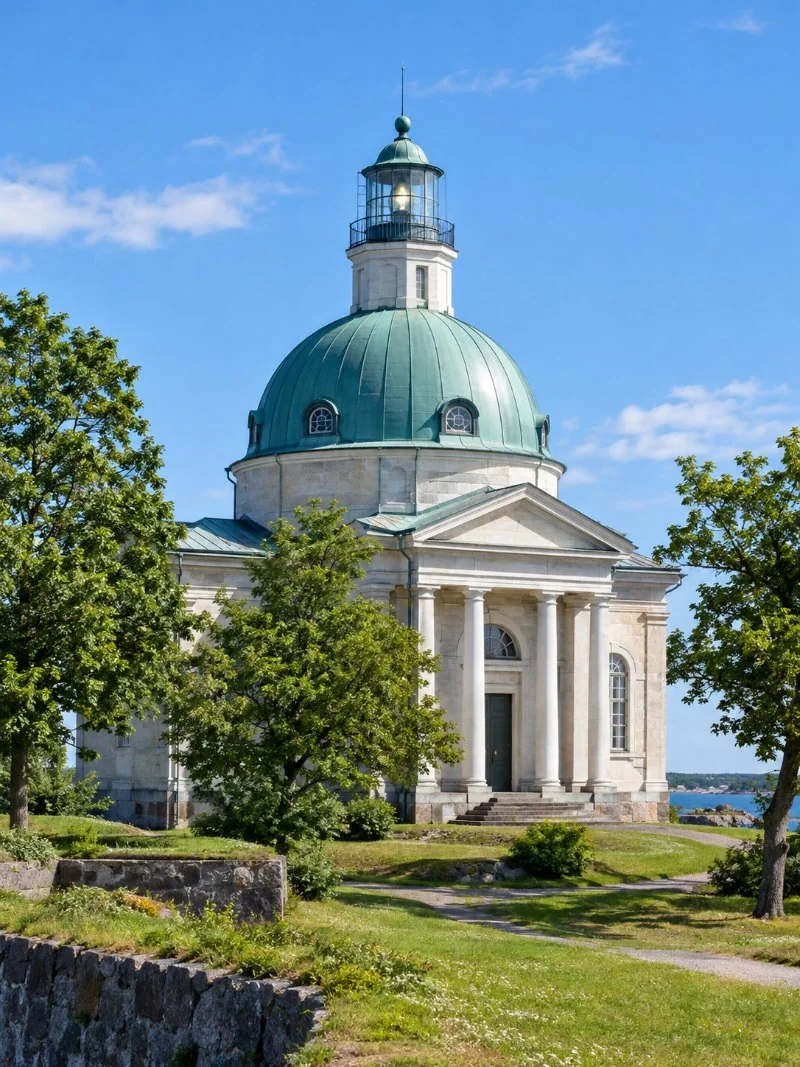
The church of Suomenlinna also dates back to the Russian era. It was built in 1854 as an Orthodox garrison church, just one year before the bombardment. The church remains one of the most famous buildings on the island. If you want to hear about these events on site, a private guided walking tour takes you, according to the listing, with an official Suomenlinna guide through tunnels, by the cannons, on the ramparts and at the dry dock.
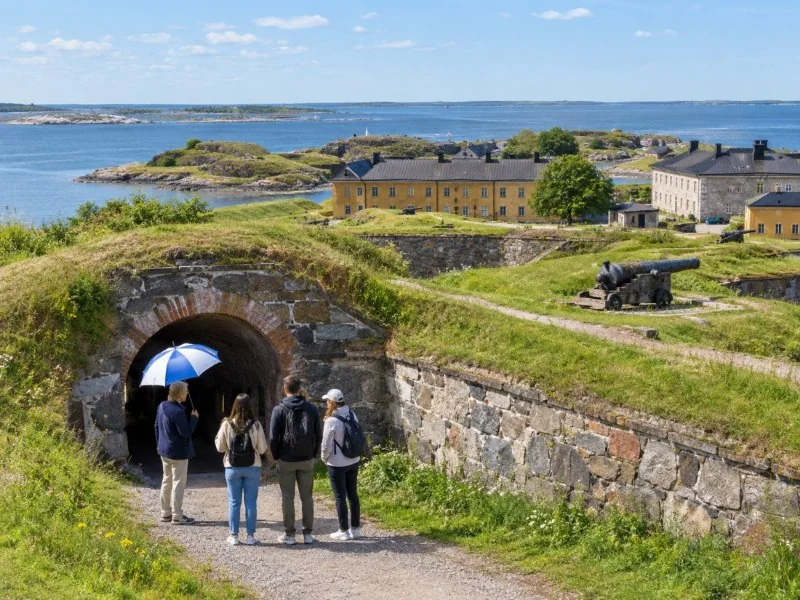
Private group and official Suomenlinna guide for 1.5 hours: tunnels, cannons, fortifications and dry dock. The ferry is not included, so arrive with your own HSL ticket.
Book thisWhat happened at Suomenlinna in 1918?
The Russians left in spring 1918, the fortress was named Suomenlinna and after the civil war a prison camp for Reds was established on the islands. At its peak, the camp held about 8,000 prisoners.
The year 1918 changed Suomenlinna in many ways. Russian troops left in the spring, and the fortress was renamed Suomenlinna; according to Wikipedia, the new name was adopted on 12 May 1918. After the civil war, a prison camp for Reds was established on the islands, and according to suomenlinna.fi, there were up to about 8,000 prisoners at its peak.
In the same year, the church became Lutheran, and its onion domes were removed. Since 1929, the church’s dome has also served as a lighthouse, flashing the Morse letter H, the symbol of Helsinki. The fortress’s history is covered in more detail at the Suomenlinna Museum; read more about the museums of Suomenlinna.
What does the King's Gate stone tablet say?
The most famous of the King's Gate stone tablets urges future generations to stand on their own ground and not rely on foreign help. The text was written by Augustin Ehrensvärd.
The King's Gate was built on Kustaanmiekka in 1753 - 1754, and it is named after King Adolf Fredrik, who landed there on an inspection tour. The texts on the gate's stone tablets were written by Ehrensvärd. The most famous of them reads in Swedish "Eftervärld, stå här på egen botten och lita icke på främmande hjälp", freely translated: future generations, stand here on your own ground and do not rely on foreign help.
The King's Gate is the endpoint of the Blue Route at the southern tip of the fortress, about a 30 - 45 minute walk from the main pier. In the summer season, the FRS waterbus also stops at its pier, so you can return to the city from the gate without walking back. The waterbus return ticket covers, according to the listing, the return from the King's Gate or Artillery Bay; HSL tickets are not valid on the waterbus.
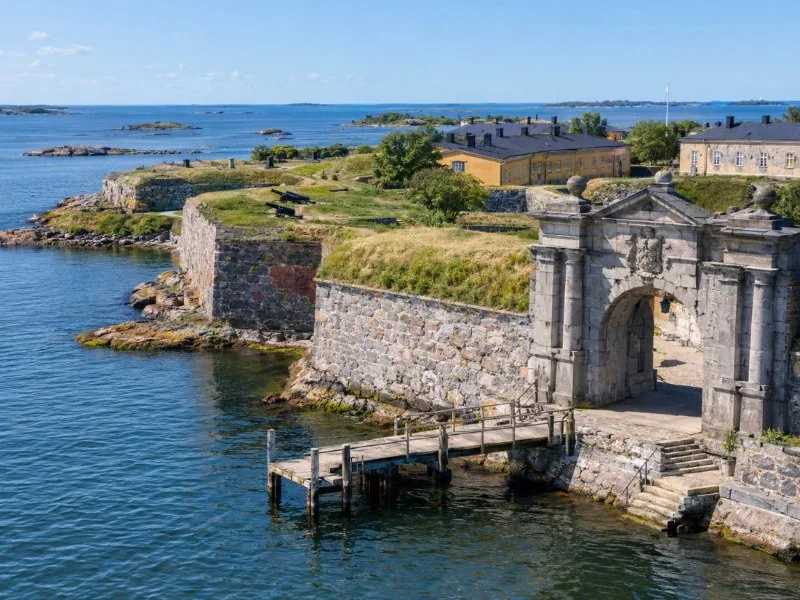
Return from King's Gate or Artillery Bay on the same ticket: the waterbus stops right at the gate’s pier during the summer season.
Book thisWhy is Suomenlinna a UNESCO World Heritage site?
Suomenlinna was inscribed on the UNESCO World Heritage List in 1991 as a unique monument of military architecture.
After military use, Suomenlinna was transferred to civilian administration in 1973, when the Governing Body of Suomenlinna was established. Since then, the islands have become an inhabited district and a visitor destination, open every day of the year with no admission fee. In 1991, UNESCO inscribed the fortress on the World Heritage List as a unique monument of military architecture.
This UNESCO World Heritage site is not a museum behind glass: the islands are home to about 800 people and have around 400 jobs. To find out what daily life in the fortress is like, see the guide life in Suomenlinna. You can reach the island year-round on the HSL ferry with a regular AB ticket; see departures and tickets in the Suomenlinna ferry guide.
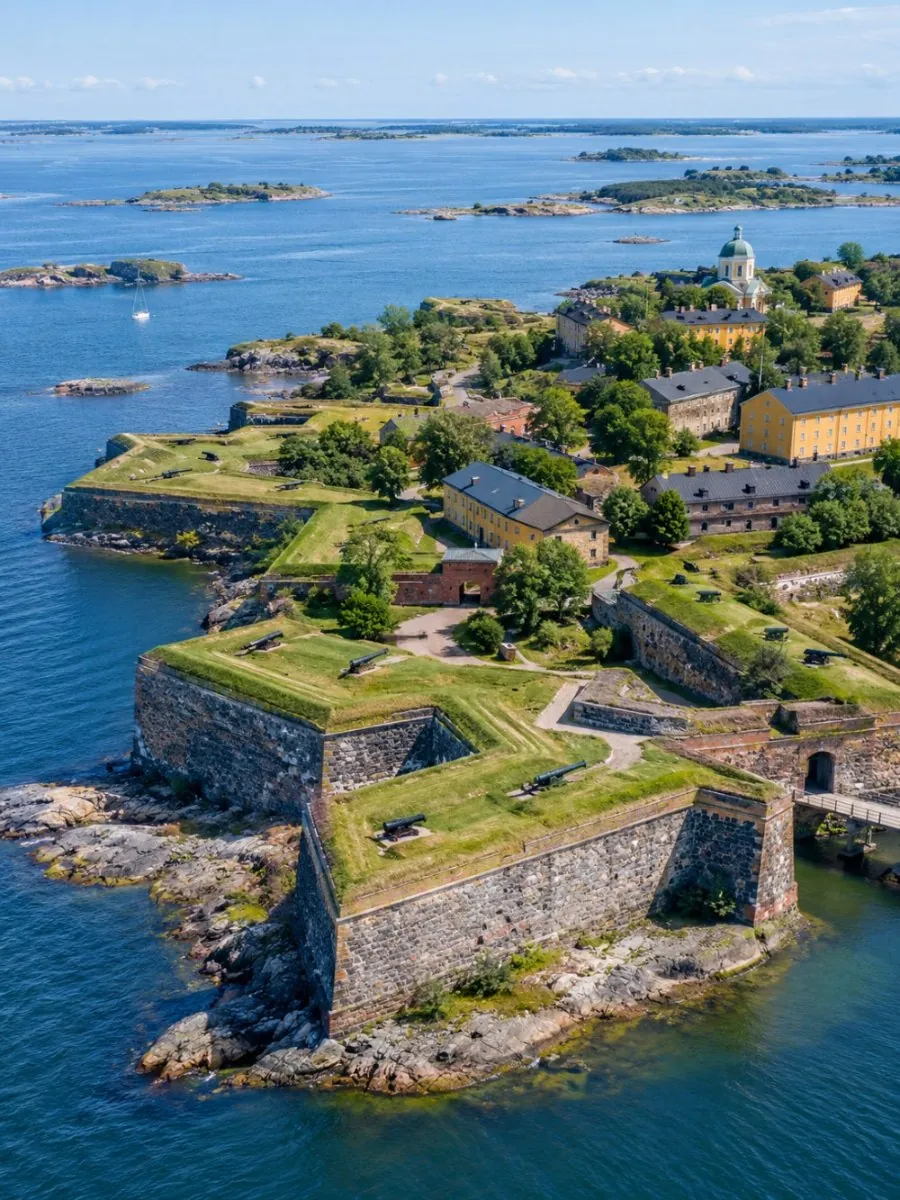
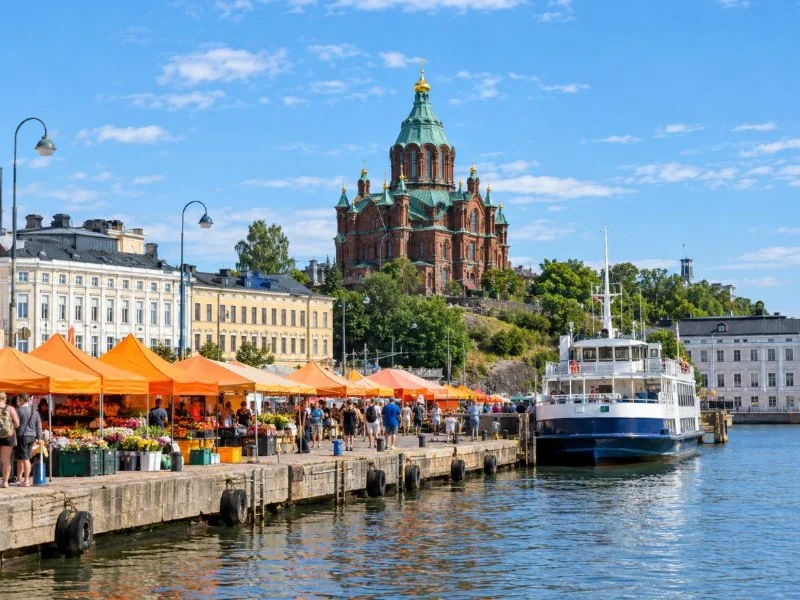
Pick-up from selected hotels, Uspenski Cathedral and Sibelius Monument, plus a ferry to Suomenlinna return: city and fortress in 5.5 hours.
Book thisFrequently asked questions
Who built Suomenlinna?
Construction was led by Swedish artillery officer Augustin Ehrensvärd. The foundation stone was laid on Susisaari on 12 September 1748, and building work lasted about sixty years.
Why did Suomenlinna surrender?
Commandant Carl Olof Cronstedt had agreed with the Russians that the fortress would surrender if Swedish warships did not arrive by 3 May. No help came, and the fortress was handed over in May 1808.
When did Viapori become Suomenlinna?
The name was changed to Suomenlinna in 1918, on 12 May 1918 according to Wikipedia. In Swedish, the fortress is Sveaborg.
When did Suomenlinna become a UNESCO World Heritage Site?
In 1991, when UNESCO listed it as a unique monument of military architecture. There is no entry fee to the islands.
Ready to book
Select your ticket
Free cancellation 24 hours before for every option. Trips are booked on GetYourGuide.
Helsinki and Suomenlinna: city tour and ferry
- Local guide and driver; pickup from selected hotels
- Olympic Stadium, Sibelius Monument, Esplanadi, Old Market Hall and Uspenski Cathedral
- Return ferry to Suomenlinna and walking tour: barracks, Great Courtyard and Augustin Ehrensvärd’s tomb
Private guided tour: tunnels, ramparts and dry dock
- Private guided walking tour with an official Suomenlinna UNESCO guide; language English or Russian
- Tunnels, cannons and fortifications, dry dock and boats and submarines built on the island, according to the listing
- Meeting at the main pier under the blue and white umbrella; ferry not included, HSL AB ticket is sufficient